The useful takeaway
Prepare a quiet, manageable starting space with separate resources and a place to hide. Rehearse how the household will use it before the cat arrives, then let the cat set the pace.
Choose the calmest practical starting point
Cats Protection recommends a quiet initial room away from busy areas, ready before the cat leaves its carrier. Think about how the room functions through the day, not just how peaceful it looks during a quick visit.
In a small home, a bedroom may also be a work space or the route to a cupboard. Write down those uses before deciding. If a separate room is difficult, discuss the actual layout and other animals with the adoption organization. A generic floor plan cannot confirm that a shared corner will meet this particular cat’s needs.
Map the essentials before moving furniture
Cats Protection’s home-preparation guidance covers separated food and water, litter away from both, a comfortable bed, a hiding place, a sturdy scratcher and suitable toys. Its checklist also explains why households with multiple cats need additional resources.
| Resource | Placement question |
|---|---|
| Food and water | Are they in separate places the cat can reach? |
| Litter | Is it away from bowls, with a dependable approach? |
| Rest and hiding | Can the cat use them without someone reaching in? |
| Scratching and play | Is there usable space around appropriate, stable equipment? |
| Any raised resting option | Is it secure and suitable for this cat’s age and mobility? |
The questions are our planning prompts, not a room certification. Ask the adoption organization about familiar supplies and known preferences. For a kitten or a cat with limited mobility, discuss accessible options instead of assuming height is always better. See our litter-box placement guide when the available floor space is tight.
Use the printable room walkthrough
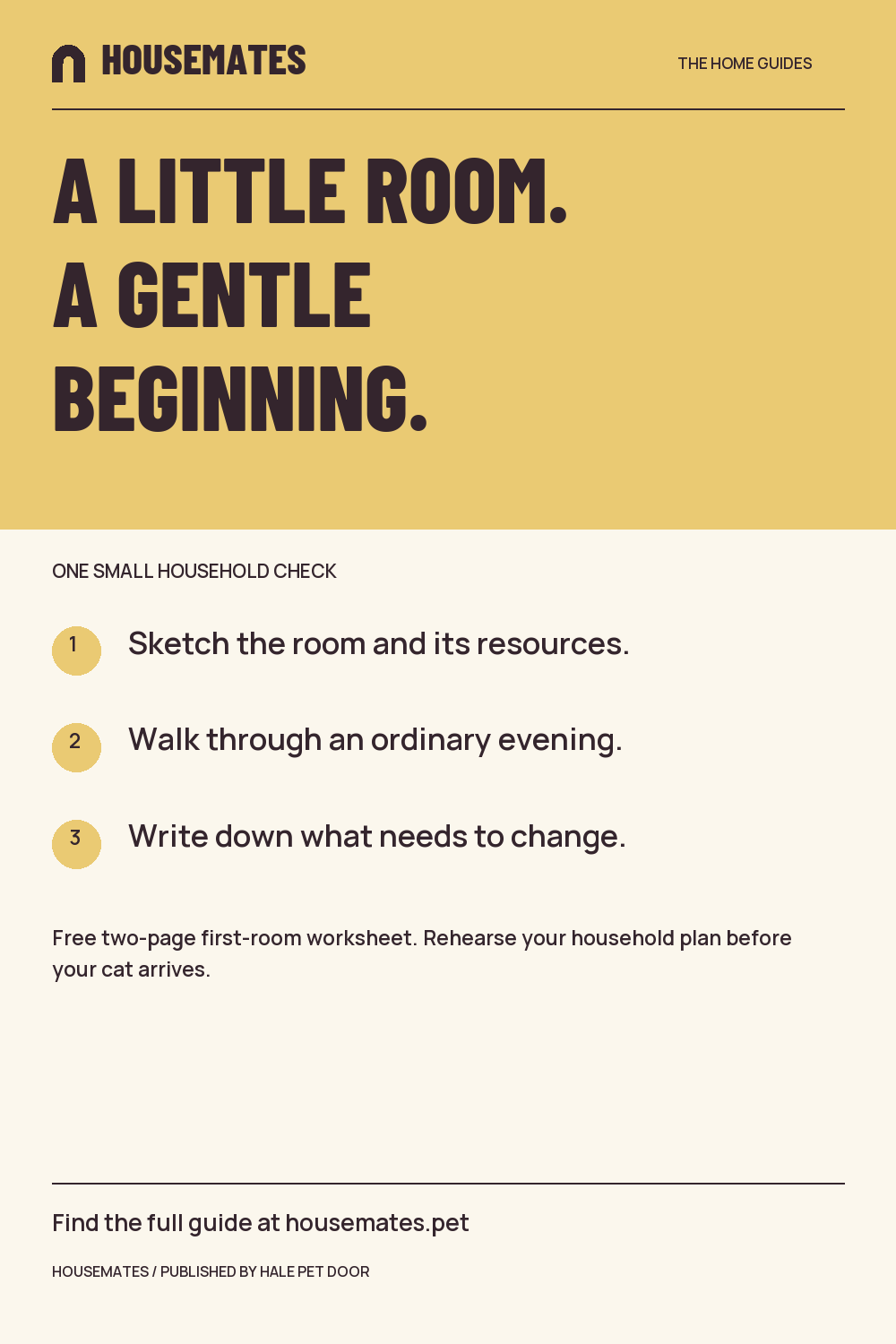
Take the two-page worksheet into the empty room. Page one gives you a blank sketch area; page two helps you rehearse ordinary household activity and record unresolved setup questions. No measurements are prescribed and no score is calculated.
- Draw the walls, door swing, windows and large furniture. Add food, water, litter, rest, hiding and scratching as separate labels.
- Trace the route from the doorway to each resource. Leave enough real space to use, refill or clean it.
- Walk through your morning, evening and overnight routine. Note which doors, chairs, bags or other household items change position.
- Choose a responsible adult for each unresolved item and write what needs to happen before arrival.
For example, “desk chair covers the water route after work” becomes “move the chair under the desk before leaving the room.” This is an invented household example to show how the sheet works, not a tested room design. Avoid writing entry codes, addresses or private care details on a sheet you may display.
Check the room from floor level
The ASPCA’s moving guidance calls for checking hazards such as cords, unsuitable plants and places an animal could become stuck before introducing pets to a new home. It recommends starting with a prepared home base and expanding access gradually.
Use that as the prompt for a practical walkthrough: look behind furniture, under the bed and at doors and windows. Remove or secure hazards before arrival, and ask for help where a fixture or gap needs proper repair. Leave an accessible, intentional hiding place; removing a dangerous gap should not mean removing every retreat.
A box of cleaning supplies waiting to be put away is still part of the room. Complete the actual job before checking it off. The worksheet records your review; it is not an exhaustive hazard list or a guarantee that the room is safe.
Rehearse the arrival without the cat
Decide who carries the secure carrier, who manages doors and where other pets will be during arrival. Walk that route once with the empty carrier before collection. Check where you will set it down and whether the room door can close without moving supplies.
Write the household agreement in plain language: which adult manages the room, how visitors will know a cat is settling in, and who answers a question. Follow the adoption organization’s handover instructions. Cats Protection advises allowing exploration at the cat’s pace and avoiding forcing a hiding cat out.
Keep the first visit calm. A photograph, greeting or planned activity can wait if the cat is not ready. Plan introductions to resident animals separately with suitable guidance; sharing a doorway is not an introduction plan.
Plan the people, too
- Agree who checks the essential resources and which adult manages access.
- Explain that hiding and resting places are left undisturbed.
- Give children active adult guidance and keep early visits manageable.
- Keep cleaning supplies, work bags and visitors’ belongings out of the resource routes.
The useful outcome is a plan the household can carry out during an ordinary day. If keeping the route open depends on everybody remembering an unusual exception, reconsider the arrangement or discuss an alternative with the adoption organization.
Expand according to the cat, not the calendar
Cats Protection describes varying settling times and encourages following the cat’s response. A fixed three-day or three-week deadline cannot tell you when an individual cat is ready. Keep a familiar retreat available as access changes, and ask the adoption organization about the next step.
Report concerning changes in eating, drinking, toileting or behavior to your veterinarian. A cat that seems unwell needs advice rather than simply more time in the room. Once the cat is comfortable, our small-home enrichment ideas can help you choose a modest addition while preserving the established essentials.
Sources & scope
Published by Hale Pet Door. Prepared with AI assistance and checked against the sources below; not reviewed by a veterinarian. Our planning exercises are original editorial suggestions. For individual health or behavior concerns, consult the appropriate qualified professional.
- Bringing a cat homeCats Protection · Checked 2026-09-13
- Preparing your home for a catCats Protection · Checked 2026-09-23
- Moving with your petASPCA · Checked 2026-09-13